
Cambridge Zoning Needs a Fresh Look
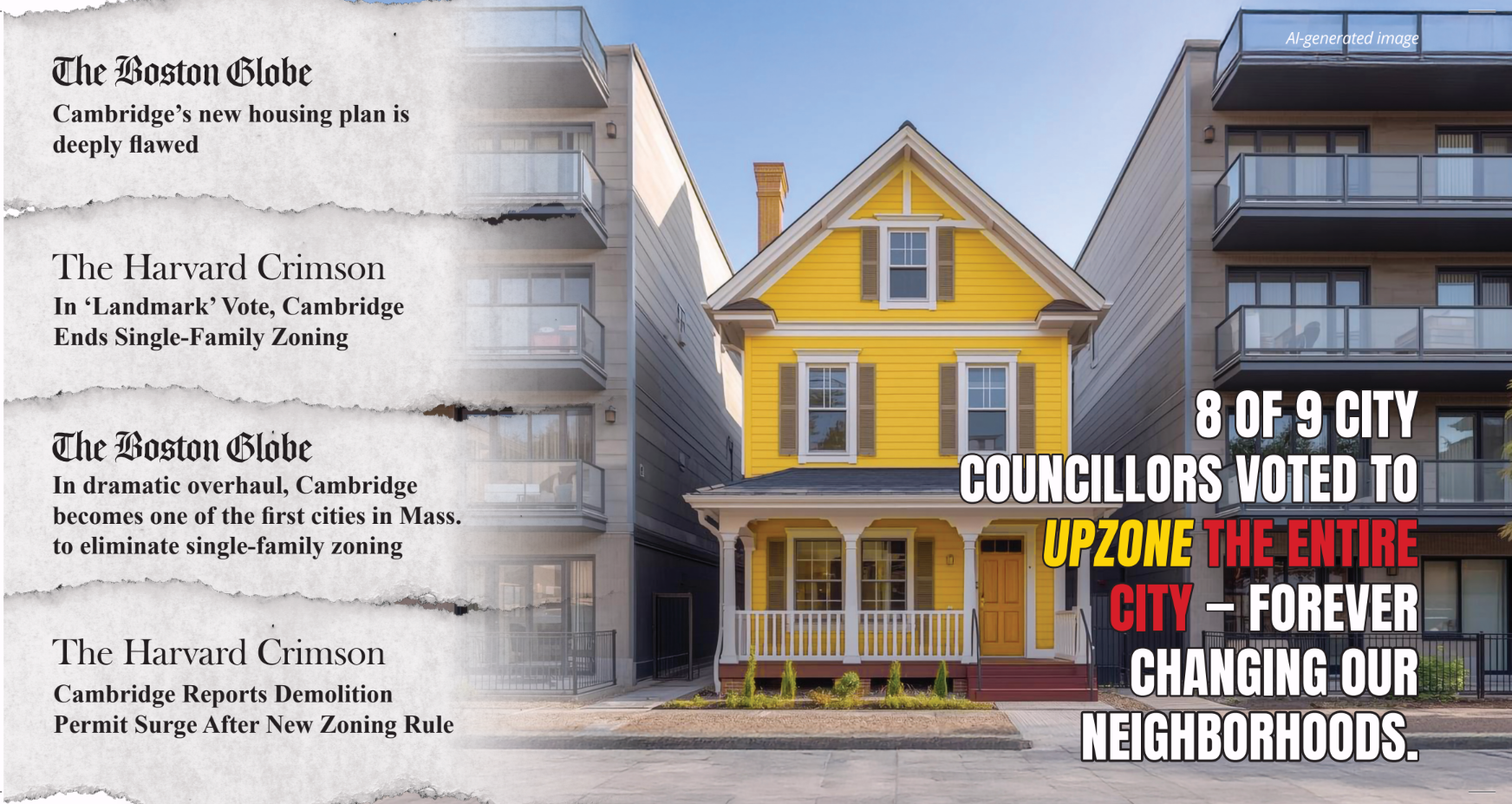
As I’ve gone door to door across Cambridge — from North Cambridge to Riverside, from East Cambridge to West — I keep hearing repeatedly how worried and angry people are about this new up-zoning ordinance.
Neighbors stop me on their porches, at the ballfield, and in the grocery store to say the same thing: “They didn’t tell us what they were doing.”
And they’re right.
The City Council rushed through a sweeping zoning change that incentivizes developers to tear down single-, two-, and three-family homes and replace them with four- to six-story apartment buildings as of right — without requiring real affordability or meaningful community input.
That’s not thoughtful planning. It’s a developer giveaway that puts profits before people. It does nothing to make Cambridge more affordable for working—and middle-class families, and it risks displacing even more residents who are already struggling to stay here.
This ordinance increases density without accountability. It will add pressure on our utilities, municipal services, schools, and neighborhoods while driving up land values and property taxes. Longtime homeowners are worried, renters are anxious, and families are wondering if their kids can ever afford to live here.
I’ve lived in Cambridge my entire life. I grew up in a two-family home in North Cambridge, and I’m raising my family now on Fresh Pond Parkway in West Cambridge. I’ve seen this city change dramatically — and I’ve also seen what happens when City Hall stops listening to the people who live here.
A Smarter, Fairer Housing Policy
Cambridge’s housing challenges are real — but they’re not unique. We face the same pressures as cities across Massachusetts: too few homes, sky-high rents, and middle-class families priced out.
In my lifetime, Cambridge has done more than the other 350 cities/towns in Massachusetts to help alleviate the housing shortage.
We’re home to two world-class universities, Harvard and MIT. Those institutions contribute enormously to our city, but they also add significant demand to an already limited housing supply.
We have partnered with the state and federal government to extend the green line to allow people who live in Medford and Somerville to commute effectively to Kendall Square. Despite these efforts, we remain Massachusetts's second most densely populated city, behind just Somerville. This is a regional problem that requires a regional solution, and I agree with much of what Governor Healey is proposing.
Here’s what I support:
Building multi-family housing near transit stations, where density makes sense.
Repurposing vacant office buildings into affordable housing.
Developing municipal housing on city-owned property — and prioritizing teachers, police officers, firefighters, and Cambridge families facing displacement.
Incentivizing Accessory Dwelling Units (ADUs) through tax credits, grants, and low-interest loans — to help homeowners add small, affordable units without destroying neighborhood character.
Creating a “Cambridge First” Homeownership Program offering below-market-rate mortgages to help Cambridge families buy their first home here.
That’s a plan for balanced, responsible growth — not bulldozers and broken promises.
Listening and Leading
A political statement, however well-intentioned, is never an adequate substitute for sound policy.
If elected, I’ll push for a review and revision of the upzoning ordinance to ensure the voices of neighbors and abutters are included — and that new development reflects the values and vision of the people who live here.
We can meet our housing needs without erasing the communities that make Cambridge special. We can grow responsibly, affordably, and fairly — with respect for our history and a plan for our future.
Most of all, the City Council must listen.
We have to work together to create a housing policy that respects and celebrates the diversity of our neighborhoods, while reflecting a shared vision for the future of families in Cambridge.
What I’m hearing at every door is simple: people want balance — affordability with accountability, and growth that serves the people who live here.
That’s the Cambridge I love — and the one I’ll fight for.